
Everywhere you look, the message is the same:
“AI is replacing jobs.”
“Automation is eliminating workers.”
“Small businesses won’t need staff anymore.”
It’s dramatic.
It’s clickable.
And it’s mostly wrong.
Because in the real world — inside actual businesses — AI is not replacing great employees.
It’s replacing friction.
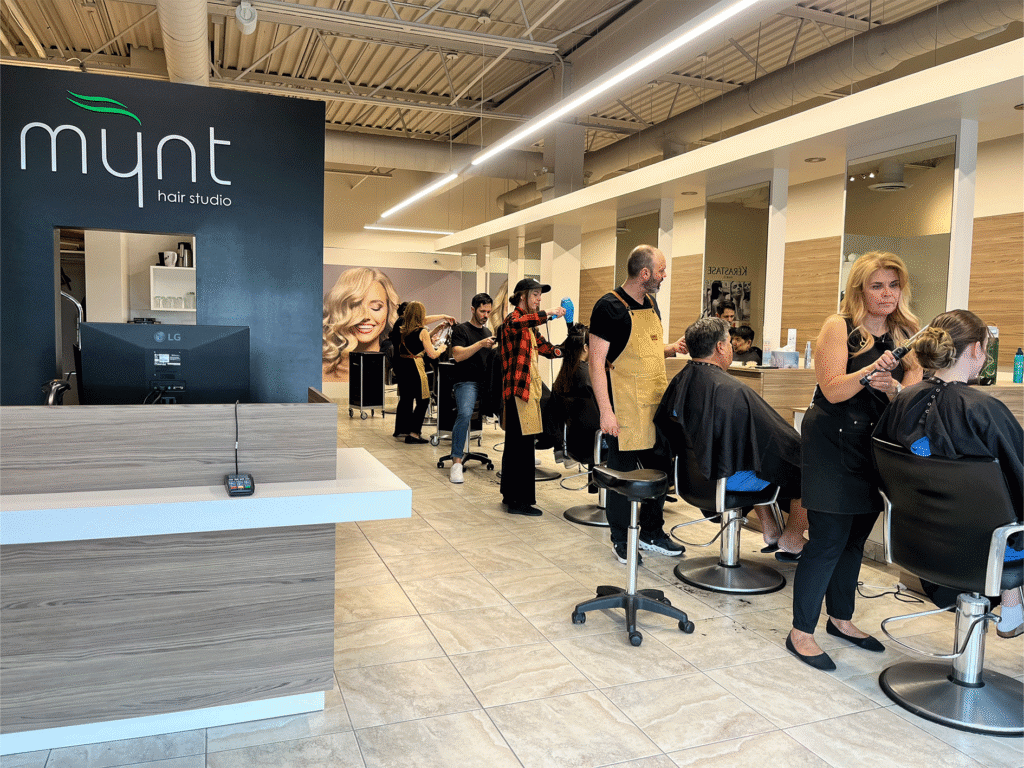
This is the story of how a growing hair salon automated only administrative tasks, increased revenue, reduced stress, boosted reviews, and didn’t fire a single person.
If you run a service business — salon, law firm, accounting firm, construction company, med spa, or consulting agency — this breakdown will show you exactly how to think about AI the right way.
The Fear: “If We Automate, We’ll Have to Cut Staff”
The salon owner had one major concern before implementing AI:
“I don’t want technology to replace my team.”
She had:
- 6 stylists
- 1 front desk coordinator
- A loyal customer base
- Growing demand
- Increasing admin overload
Her business wasn’t struggling.
It was growing.
And growth without systems creates chaos.
Phones ringing nonstop.
DMs piling up.
Manual confirmations.
Chasing no-shows.
Late-night scheduling adjustments.
Sound familiar?
This wasn’t a staffing problem.
It was an operational design problem.
The Real Problem: Admin Was Stealing Revenue
Here’s what the front desk handled daily:
- 30+ repetitive phone calls
- Appointment confirmations
- Reminder calls
- Rescheduling requests
- Review follow-ups
- Social media DMs
- Basic pricing questions
- End-of-day revenue reports
None of these tasks required creativity.
None required emotional intelligence.
None required a licensed stylist.
Yet they consumed 15–20 hours per week.
That’s nearly half of a full-time role spent on repetitive administrative activity.
And here’s the hidden cost:
While the front desk was busy reacting…
They weren’t proactively helping increase revenue.
Admin overload creates opportunity loss.
What We Decided to Automate (And What We Protected)
The biggest mistake businesses make with AI is trying to automate everything.
Instead, we used one rule:
Automate the predictable. Protect the valuable.
We Automated:
- Appointment confirmations
- Reminder texts
- Review requests
- Basic FAQ responses
- Daily revenue reporting
We Did NOT Automate:
- Client consultations
- Styling sessions
- Upselling conversations
- Product recommendations
- Emotional engagement
Because that’s where the money lives.
AI should handle patterns.
Humans should handle trust.
The Exact Automations Implemented
Let’s break down what changed and the measurable impact.
1. Automated Appointment Confirmations
Before: Manual phone confirmations.
After: Automated SMS confirmation 48 hours prior.
If the client didn’t confirm, a follow-up message triggered automatically.
Result:
27% reduction in no-shows within 60 days.
Empty chairs are lost revenue.
Automation alone paid for itself quickly.
2. Smart Reminder System
Three-hour reminder before appointment.
No human involvement required.
Result:
Significant drop in last-minute “I forgot” cancellations.
3. Automated Review Engine
After checkout, clients received a friendly, personalized message requesting a Google review.
Not robotic. Not spammy. Just consistent.
Result:
3X increase in five-star reviews within 90 days.
This improved:
- Local search visibility
- Trust factor
- New client acquisition
Reviews compound over time. AI made it systematic.
4. AI FAQ Assistant
Installed on:
- Website
Handled:
- Pricing questions
- Hours
- Location
- Booking links
- Service explanations
Result:
40% reduction in repetitive calls.
Faster response time.
Higher website conversion rate.
The front desk was no longer overwhelmed.
5. Automated Daily Revenue Reports
Every evening, the owner received:
- Total revenue
- Service breakdown
- Retail sales
- Booking stats
No manual spreadsheet updates.
Clear visibility. Faster decisions.
What Happened Next (The Surprising Part)
Here’s what didn’t happen:
No layoffs.
No reduced hours.
No “AI replaced us” resentment.
Instead:
- Front desk stress dropped dramatically.
- Stylists focused more on client experience.
- Upsells increased.
- Add-on services increased.
- Retail product sales improved.
Why?
Because attention shifted from admin…
To revenue-driving activity.
When humans are freed from repetition, they perform better.
The Financial Impact
Let’s connect this to real business metrics.
Fewer No-Shows = Higher Revenue
Every empty chair is unrecoverable revenue.
Reducing no-shows directly increases margin.
More Reviews = More Clients
More visibility = More bookings.
Faster Response = Higher Conversion
People book with businesses that respond quickly.
Lower Burnout = Lower Turnover
Turnover costs money.
Training costs money.
Chaos costs money.
Automation reduces all three.
This is how AI increases profit per employee.
Why Most Businesses Get AI Wrong
They approach AI with one of two mindsets:
- Replace staff to cut payroll.
- Avoid AI entirely out of fear.
Both are flawed.
The smarter approach is:
Use AI to increase output without increasing overhead.
That’s leverage.
The Framework You Can Apply
If you want to replicate this in your business, follow this simple three-step framework.
Step 1: Identify Revenue Activities
What directly generates income?
Protect those tasks.
Step 2: Identify Repetitive Tasks
What happens daily or weekly that follows a pattern?
Automate those.
Step 3: Preserve High-Trust Moments
Sales.
Consultations.
Client relationships.
Negotiations.
Never automate the heart of your brand.
The Competitive Advantage Nobody Talks About
The winning salon isn’t just the most stylish.
It’s the most operationally efficient.
The salon that:
- Responds instantly
- Rarely has no-shows
- Has hundreds of five-star reviews
- Tracks performance daily
- Follows up consistently
That salon dominates.
And most competitors won’t even realize why.
AI Is Not a Layoff Tool
It’s a leverage tool.
If your AI strategy requires cutting your best people…
You designed it wrong.
The strongest businesses today:
- Automate backend friction
- Elevate frontline experience
- Increase revenue per employee
- Protect margins
- Improve customer satisfaction
That’s the model.
What This Means for Service Businesses
If you run a:
- Salon
- Law firm
- Construction company
- Accounting practice
- Med spa
- Consulting agency
Ask yourself:
Where are my highest-paid people doing lowest-value work?
That’s your AI opportunity.
Not in removing people.
In protecting them.
The Bigger Picture: The Future of Work
The future isn’t AI vs humans.
It’s AI + humans.
Businesses that automate admin will outperform those who don’t.
Not because they’re smaller.
Because they’re sharper.
They respond faster.
They operate cleaner.
They make better decisions.
They remove wasted motion.
Frequently Asked Questions (FAQ)
1. Does AI always lead to job cuts?
No. When implemented strategically, AI reduces repetitive tasks and allows teams to focus on revenue-generating work instead of administrative overload.
2. What types of tasks should small businesses automate first?
Start with predictable, repetitive tasks like appointment confirmations, reminders, follow-ups, FAQs, data entry, and reporting.
3. Is AI expensive for small businesses?
Many automation tools are affordable and scalable. In most cases, reducing no-shows or increasing conversion rates offsets the cost quickly.
4. Will automation hurt customer experience?
Not if implemented correctly. AI should handle backend efficiency while humans manage high-trust, relationship-driven interactions.
5. How long does it take to see results?
In this salon’s case, measurable improvements appeared within 60–90 days.
6. What’s the biggest mistake businesses make with AI?
Trying to automate emotional or strategic tasks instead of repetitive administrative ones.
Final Thoughts
The myth says:
AI replaces people.
Reality says:
AI replaces wasted time.
This hair salon didn’t shrink its team.
It strengthened it.
No layoffs.
No drama.
No fear-based decisions.
Just smarter systems.
If you’re thinking about AI in your business, start small.
Automate admin.
Measure impact.
Protect your people.
Scale intentionally.
Because the businesses that win in this new era won’t be the ones who fear automation.
They’ll be the ones who use it to empower their team — and grow.