
AI Screens 200 Job Applicants in 10 Minutes: The Future of Hiring Is Here
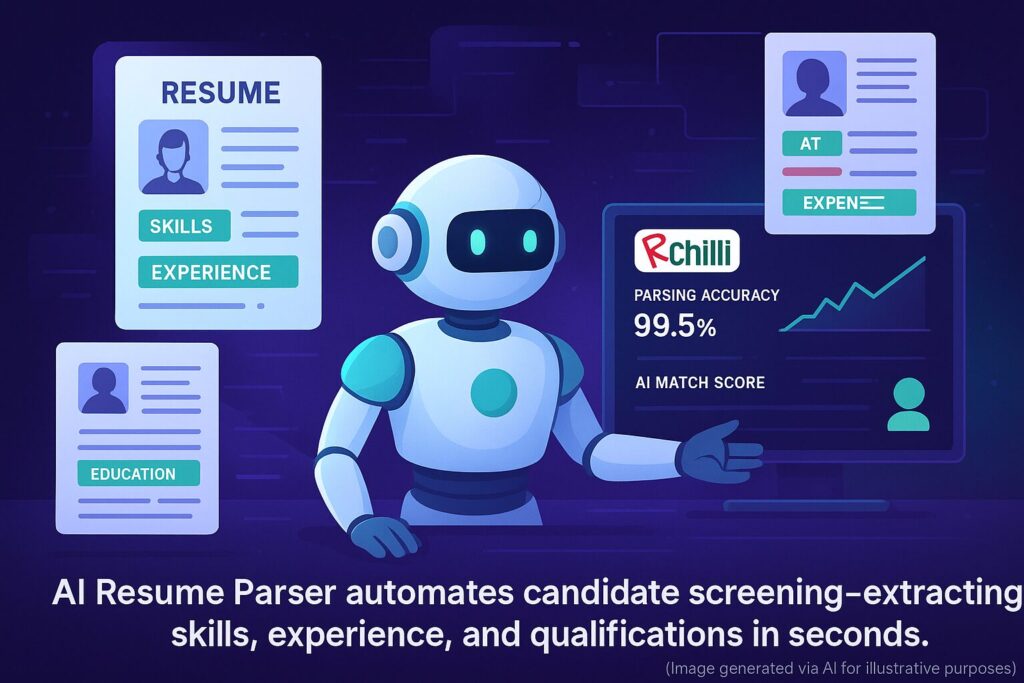
Hiring has always been one of the most time-consuming, expensive, and inconsistent processes in business. For decades, recruiters have relied on manual resume reviews, gut instincts, and slow communication cycles to identify the right candidates.
But everything just changed.
A small HR agency recently accomplished something that would have been impossible just a few years ago—they screened over 200 job applicants in just 10 minutes using artificial intelligence.
No extra staff.
No burnout.
No delays.
Just pure operational efficiency.
This isn’t just a cool tech story—it’s a blueprint for how modern businesses will scale moving forward.
The Breaking Point: When Traditional Hiring Fails
Before implementing AI, this HR agency was facing the same problems most recruiting teams deal with today:
- Hundreds of resumes per job posting
- 6–8 hours spent manually screening candidates
- Inconsistent evaluation across recruiters
- Missed top talent buried in applications
- Slow response times hurting client satisfaction
At scale, this wasn’t just inefficient—it was costing the agency money.
Every delay meant:
- Lost placements
- Frustrated clients
- Reduced revenue per recruiter
The system was broken.
The AI Shift: From Manual to Machine Intelligence
Instead of hiring more recruiters, the agency made a smarter move—they automated the screening process using AI.
Here’s what they implemented:
1. Resume Parsing Automation
The AI system scanned every resume instantly and extracted:
- Skills
- Job history
- Certifications
- Education
- Keywords relevant to the job description
No human reading required.
2. Intelligent Candidate Scoring
Each applicant was evaluated against predefined hiring criteria:
- Required skills match
- Years of experience
- Industry relevance
- Role-specific qualifications
The AI assigned a score to every candidate in seconds.
3. Natural Language Processing (NLP)
Beyond keywords, AI analyzed:
- Communication quality
- Contextual relevance
- Behavioral indicators from cover letters
This allowed the system to assess “fit,” not just qualifications.
4. Automated Ranking & Shortlisting
Once scored, candidates were:
- Ranked from best to worst
- Filtered into a shortlist (top 10–20%)
- Sent to recruiters for final review
The Result: 200 Applicants in 10 Minutes
The transformation was immediate:
- 200+ resumes screened in under 10 minutes
- 90% reduction in manual workload
- 10+ hours saved per role
- Faster placements and happier clients
Recruiters were no longer buried in admin work—they were focused on what actually drives revenue:
- Interviewing
- Closing placements
- Building client relationships
Why This Matters (And Why It’s Happening Now)
This shift isn’t random. It’s happening because the hiring landscape itself has changed.
1. AI-Generated Applications Are Exploding
Candidates are now using AI tools to:
- Write resumes
- Generate cover letters
- Apply to dozens of jobs instantly
This has created a volume problem.
More applicants ≠ better candidates.
It just means more noise.
2. Manual Screening Can’t Keep Up
Human recruiters simply cannot:
- Read hundreds of resumes efficiently
- Maintain consistency
- Move fast enough to stay competitive
Without AI, agencies fall behind.
3. Speed Is the New Competitive Advantage
In hiring, the fastest agency often wins.
AI enables:
- Instant response times
- Faster shortlists
- Quicker placements
That translates directly into revenue.
The Hidden Advantage: Scaling Without Hiring
Here’s where it gets interesting.
This HR agency didn’t just save time—they changed their entire business model.
Instead of:
Hiring more recruiters to handle more volume
They did this:
Increased output per recruiter using AI
The Result:
- More placements per employee
- Higher profit margins
- Scalable operations without overhead
This is the real power of AI.
Step-by-Step: How You Can Replicate This System
If you’re running an HR agency—or any service business—you can implement this exact model.
Step 1: Standardize Your Intake Process
Use structured forms instead of:
- Email resumes
- Unorganized submissions
This ensures clean data for AI processing.
Step 2: Deploy AI Screening Tools
Use AI to:
- Parse resumes
- Extract key data
- Score candidates
This becomes your first filter.
Step 3: Build a Scoring Framework
Define what matters most:
- Skills
- Experience
- Certifications
- Culture fit
Assign weights to each factor.
Step 4: Automate Shortlisting
Let AI:
- Rank candidates
- Filter top performers
- Deliver a shortlist instantly
Step 5: Human-in-the-Loop Review
Your team only reviews:
- Top 10–20% of applicants
This maintains quality while saving time.
Step 6: Automate Follow-Ups
Use automation for:
- Interview scheduling
- Candidate updates
- Rejection emails
Business Impact: What This Means for Growth
This isn’t just about hiring.
It’s about how businesses scale in 2026 and beyond.
1. Increased Revenue Per Employee
More output without increasing headcount.
2. Faster Turnaround = More Deals
Speed leads to:
- Higher client satisfaction
- More repeat business
3. Stronger Market Positioning
AI-powered agencies stand out as:
- Innovative
- Efficient
- Results-driven
4. Reduced Operational Costs
Less reliance on:
- Manual labor
- Large teams
Real Talk: AI Won’t Replace Recruiters
Let’s be clear.
AI is not replacing recruiters.
It’s replacing:
- Repetitive tasks
- Inefficient workflows
- Manual bottlenecks
The best recruiters will actually become:
- More strategic
- More productive
- More valuable
The Future of Hiring
We’re entering a new era where:
- AI screens candidates
- Humans make final decisions
- Automation handles communication
This hybrid model is:
- Faster
- Smarter
- More scalable
And it’s quickly becoming the industry standard.
Frequently Asked Questions (FAQ)
1. Is AI resume screening accurate?
Yes—modern AI systems use structured data and scoring models to ensure consistency and reduce bias compared to manual reviews.
2. Will AI replace HR jobs?
No. AI enhances HR roles by removing repetitive tasks, allowing recruiters to focus on strategy and relationships.
3. How much time can AI save?
On average, AI can save 10+ hours per role, depending on application volume.
4. Is this only for large companies?
No. Small agencies benefit the most because AI allows them to scale without hiring additional staff.
5. What tools are needed to start?
You’ll need:
- AI resume screening tools
- Automation platforms (like Make or Zapier)
- A structured intake system
6. Is AI hiring expensive?
Not compared to hiring additional staff. Most AI tools are significantly cheaper than full-time employees.
Final Thoughts
This small HR agency didn’t just improve efficiency.
They rewrote the rules.
They proved that:
- You don’t need a bigger team to grow
- You need smarter systems
Screening 200 applicants in 10 minutes isn’t impressive anymore.
It’s becoming the baseline.
Call to Action
If you’re serious about scaling your business:
- Start automating repetitive processes
- Implement AI where volume exists
- Focus your team on high-value work
Because the businesses that win in this new era won’t be the biggest…
They’ll be the fastest, smartest, and most automated.
Want more AI business growth strategies?
Visit 👉 www.growwithtechnology.com
Subscribe to Grow with Technology on YouTube & Spotify