
Many companies managing $5–10 million in annual online marketing budgets now rely on AI to give you an edge: AI delivers precision targeting, personalized customer experiences and real-time campaign optimization, while also making it a competitive necessity that can leave laggards vulnerable; by using predictive analytics, automation and dynamic content you can reduce waste and increase conversion rates, turning vast data into actionable insights for smarter, measurable growth.
Key Takeaways:
- AI delivers precision targeting and personalized experiences at scale, increasing engagement and relevance.
- Predictive analytics and real-time optimization uncover insights that boost ROI and cut wasted spend.
- Automation of bidding, campaign management, and creative generation accelerates execution and reduces manual work.
- Cross-channel AI (search, social, email, eCommerce) unifies data for consistent customer journeys and measurement.
- For $5–10M marketing budgets, integrating AI tools improves conversion rates and enables sustainable growth.
Understanding AI in Digital Marketing
Definition of Artificial Intelligence
AI combines algorithms, models, and automation so you can move past manual rules to precision targeting, personalized customer experiences, and real-time campaign optimization at scale. You’ll use systems that analyze millions of events—clicks, impressions, purchases—to predict behavior and automate actions. At the same time, be mindful that data privacy and biased training data can introduce legal and performance risks if you don’t enforce governance and anonymization.
The Role of Machine Learning
Machine learning powers predictive analytics, CLV models, lookalike audiences, and automated bidding so you can optimize across channels with minimal manual tuning. You’ll typically train models on millions of rows of clickstream and transaction data; many advertisers report ML-driven bidding can often reduce CPA by ~15–30%. Watch for model drift, which will degrade results if you don’t retrain regularly.
In practice, you’ll split work between offline feature engineering and online inference: batch-train models weekly or daily and serve predictions in sub-second latency for personalization. For example, an eCommerce advertiser with a $6M digital budget might use gradient-boosted trees for CLV, neural recommenders for product discovery, and a reinforcement-learning layer for bid optimization—this combination frequently lifts conversion rates while cutting wasted spend. Ensure you instrument causal tests (holdouts) so your ML gains are measurable and not just correlation.
The Impact of Big Data
Big data gives you the scale to build accurate segments, 360° customer profiles, and real-time signals from social, search, email, and site behavior—often billions of events per month for mid-market advertisers. By consolidating that data, you can power lookalikes and micro-segmentation that deliver higher ROI, but you must address data governance, latency, and compliance to avoid privacy violations and analytics blind spots.
Operationally, you’ll implement streaming pipelines (Kafka, Kinesis), a data lake for raw events, and a feature store for model-ready inputs so models access fresh signals within minutes. Typical setups refresh bidding features every 1–15 minutes and recompute user-level scores daily; this cadence balances freshness with stability. When you combine clean, high-frequency data with ML, you reduce ad waste, tighten attribution, and unlock automation that scales campaign performance across search, social, email, and eCommerce channels.
Benefits of AI Technology in Marketing
Enhanced Data Analysis and Insights
AI ingests billions of events across search, social, email, and eCommerce to surface patterns you would miss manually; it can cut analysis time from days to hours and flag anomalies in real time. By using predictive models and clustering, you can reduce waste and reallocate as much as 15–25% of budget toward higher-performing channels, improving ROI visibility for teams managing $5–10M in annual online spend.
Personalization at Scale
AI drives individualized journeys by combining behavioral signals, purchase history, and context to serve dynamic creatives and product recommendations across millions of users. When you apply real-time models, you can deliver personalized experiences that typically lift conversion rates and average order value, making segmentation operational at enterprise speed without exploding headcount.
Operationally, you should deploy a hybrid stack—collaborative filtering for cold-start items and contextual bandits for real-time promotions—so your recommendation engine adapts per session. In practice, pipelines that update user embeddings hourly let you test hundreds of micro-segments; this enables you to prioritize high-LTV cohorts and run automated A/B/n tests, turning incremental personalization gains into sustained revenue growth.
Improved Customer Engagement
Conversational AI and automated messaging let you meet customers instantly across channels: chatbots handle routine queries 60–80% of the time, while adaptive push and email sequences re-engage users based on behavior. By shortening response times from hours to seconds, you create real-time, conversational experiences that boost retention and reduce friction across the funnel.
To maximize impact, combine sentiment analysis with routing rules so negative signals escalate to human agents while AI manages routine flows. You can also use sequence optimization to determine the best timing and channel for each user; in pilots, this approach typically reduces support load and improves NPS, helping you lower churn while increasing lifetime value.
Key AI Technologies Transforming Marketing
Natural Language Processing (NLP)
You can use NLP models like BERT and GPT to parse intent, extract sentiment, and generate copy at scale; finely tuned classifiers often reach >80% accuracy on product reviews, enabling automated sentiment-driven campaign adjustments. For teams managing $5–10M in spend, NLP drives personalized subject lines and dynamic landing text across millions of impressions, and A/B tests commonly show 10–20% lifts in CTR when you deploy model-generated variants. Be mindful of privacy when processing user text.
Predictive Analytics
You should deploy predictive models to forecast conversions, lifetime value (LTV), and optimal bidding; typical implementations reduce wasted spend by 10–25% and can boost conversion rates by 5–15% when you act on model signals. Lookalike scoring and propensity models let you shift budget in near real time, turning historical patterns into automated budget reallocation across channels.
Dig deeper by combining time-series forecasting (Prophet/ARIMA) with gradient-boosted or neural uplift models for segment-level action. For example, LTV forecasts can justify reallocating 5–15% of a $5–10M budget to high-value cohorts, improving ROI measurably. You must retrain models weekly or daily depending on seasonality, monitor for model drift, and guard against overfitting and biased features; tools like XGBoost, TensorFlow, and AutoML accelerate deployment but require strong data governance.
Chatbots and Virtual Assistants
You can deploy chatbots to handle routine flows, qualifying leads and answering FAQs 24/7; well-designed bots typically resolve 60–80% of common inquiries, cutting support costs and improving conversion velocity. Brands such as H&M and Sephora used conversational agents to increase on-site engagement, and integrating bots with your CRM lets you route high-intent users to sales quickly.
Architect chatbots with a hybrid stack—rule-based fallback plus LLM-driven NLU and retrieval-augmented generation (RAG)—so responses stay factual and auditable. Track containment rate, escalation rate, and resolution time; aim to escalate complex cases to humans within seconds. Also monitor hallucinations and data retention to avoid compliance breaches, since poor bot behavior can drive churn as fast as correct behavior drives revenue uplift (typical conversion uplifts range 3–8% when bots are tightly integrated into the funnel).
AI-Powered Tools for Digital Marketing
Marketing Automation Platforms
Platforms like HubSpot, Marketo and ActiveCampaign use AI for predictive lead scoring, send-time optimization, and automated journey orchestration, so you can prioritize high-value prospects and automate complex nurture flows. Case studies show automation can lift lead-to-opportunity conversion by up to 30% and cut manual campaign hours by half for teams managing $5–10M budgets. When you implement trigger-based sequencing and predictive bidding, you reduce wasted ad spend and scale consistent multichannel touchpoints without proportionally increasing headcount.
Customer Relationship Management (CRM) Systems
You’ll find CRMs such as Salesforce Einstein and Dynamics 365 embed AI for next-best-action recommendations, churn prediction, and real-time segmentation, helping sales and marketing act on the highest-value accounts. Benchmarks for mid-market teams commonly show a 10–20% lift in conversion or sales productivity after adopting AI modules. Integrating CRM signals into campaign tuning lets you target with greater precision and measure incremental revenue per channel.
Digging deeper, your CRM becomes the backbone for unified customer profiles, combining web behavior, purchase history, and support interactions to produce a single source of truth for personalization and attribution. You should enforce strict data hygiene: poor-quality records or biased training data will generate misleading predictions and wasted spend. For teams with $5–10M online budgets, linking CRM-derived propensity scores to bid strategies and creative personalization can materially improve ROAS and lifetime value calculations.
Content Generation Tools
Tools powered by large language models—GPT-based platforms, Jasper, Copy.ai—let you scale ad copy, product descriptions, and landing pages rapidly, often increasing output by 3–5x while maintaining brand templates. You can A/B test multiple AI-generated variants for headlines and CTAs, accelerating iterative optimization and reducing dependency on external agencies. Note that speed and scale come with risks if you skip review.
In practice, you should implement human-in-the-loop workflows: use AI to produce drafts, then apply editorial guardrails for tone, accuracy, and compliance before deployment. Fine-tuning models on your branded corpus improves consistency; operational teams report up to a 70% reduction in content production time when combining templates, SEO brief generation, and automated meta-tagging. Also monitor for hallucinations, copyright issues, and factual errors—automated plagiarism checks and legal review must be standard controls.
Real-World Applications of AI in Marketing
Case Studies of Successful Implementation
Across industries you’ll find measurable wins: teams using AI-driven personalization, automated bidding and predictive lead scoring report clear uplifts in efficiency and revenue, often within 6–12 months; typical improvements include double-digit increases in conversion rate and significant reductions in wasted spend, though you must manage data privacy and model bias risks.
- E‑commerce retailer (annual ad spend $7M): implemented recommendation engines and dynamic bundling; achieved a +20% revenue lift, +12% average order value (AOV), and a 15% drop in CPA over 9 months.
- Performance marketing agency (multi-client, $10M spend): migrated to automated bidding with reinforcement learning; realized a 28% reduction in CPA and +15% conversion rate while reallocating 18% of media budget to top-performing segments.
- B2B SaaS (lead gen focus): deployed ML lead scoring and intent signals; increased MQL→SQL conversion by 22%, shortened sales cycle by 18%, and lifted quarterly bookings by 14%.
- Global CPG brand: used dynamic creative optimization (DCO) across social/display; improved CTR by 40%, cut creative QA time by 70%, and scaled localized campaigns across 12 markets in under 3 months.
- Email & CRM program (retailer): applied send-time optimization and NLP for subject lines; saw a +26% open rate and +34% revenue per email versus control over a 6‑month test.
Industry-Specific Use Cases
In retail you’ll use computer vision and recommendations to boost conversion, while finance leans on predictive analytics and fraud detection; healthcare and pharma apply NLP for patient engagement but must balance personalization with strict regulatory compliance, and B2B firms focus on intent data and sales enablement to shorten cycles and raise deal win rates.
For example, you can deploy image recognition for visual search in eCommerce to reduce returns by identifying sizing/fit issues, or use churn models in telecom to target retention offers that lift lifetime value (LTV) by 10–25%. In finance, real‑time anomaly detection cuts fraud losses and false positives; in regulated sectors you’ll need audit trails and explainable machine learning to meet compliance.
ROI Measurement and Analysis
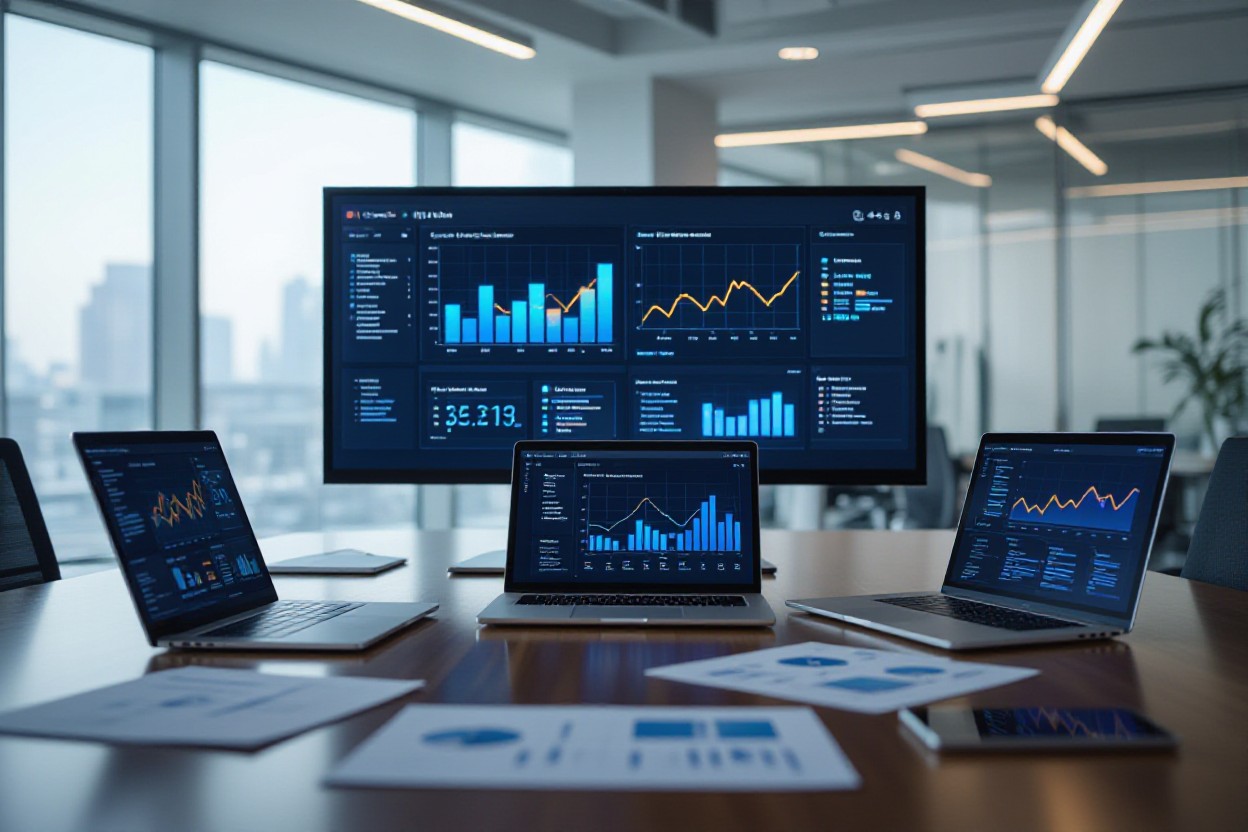
You should quantify AI impact with controlled experiments (A/B or holdout groups), track metrics like CAC, LTV, and ROAS, and attribute incremental lift to models rather than overall market trends, aiming to validate changes over a 3–12 month window for stable conclusions.
Operationally, set up lift tests and holdout audiences to isolate model value, use uplift modeling for personalized treatments, and apply multi-touch or econometric attribution for cross-channel campaigns. Combine automated dashboards with periodic audits of data quality and model drift; many teams target a 15–30% improvement in efficiency metrics (CPA, ROAS) as a benchmark for successful AI rollouts, while tracking privacy/compliance overhead as a material cost.
Challenges and Considerations
Data Privacy and Ethics
When you feed customer behavior, purchase history, and third-party signals into models, you face strict compliance regimes like GDPR (fines up to €20 million or 4% of global turnover) and CCPA (statutory penalties per violation). You should apply data minimization, anonymization, and techniques such as differential privacy, and run bias audits to avoid discriminatory targeting that can damage brand trust and trigger regulatory action.
Integration with Existing Systems
Connecting AI tools to legacy CRMs, tag managers, and data warehouses (Salesforce, Adobe, Snowflake, BigQuery) often causes friction: expect integration to span weeks to months and require API work, schema mapping, and ETL pipelines. You should prioritize real-time connectors and robust APIs to enable dynamic bidding and personalization at scale; otherwise you risk data silos that negate AI-driven optimization for $5–10 million marketing stacks.
Start with a focused pilot (4–8 weeks) on one channel to validate uplift, then scale. You’ll implement event streaming (Kafka or Kinesis) for low-latency personalization, use orchestration (Airflow, dbt) for reliable pipelines, and adopt model CI/CD (MLflow, Kubeflow) for deployments. Plan for clear data contracts, field-level lineage, and monitoring; a full production rollout typically takes 3–6 months, with SLAs and rollback plans to prevent revenue-impacting outages.
Skills and Training Requirements
You must blend marketing and engineering skillsets: hire or upskill data scientists, ML engineers, and analytics translators while training your marketers in experimentation, data literacy, and model interpretation. Typical ramp for in-house capability is 3–6 months of structured training plus hands-on projects; without this investment, AI tools remain underutilized and deliver less than their potential ROI for mid-market budgets.
You should develop a curriculum covering SQL, Python, causal inference, A/B testing (including sequential and multi-armed bandit designs), and explainability methods like SHAP, and pair it with vendor certifications (AWS/Azure/Google) and practical labs. Organize cross-functional squads (product, one ML engineer, one data engineer, two marketers) and set KPIs for model accuracy, data latency, and campaign adoption—target moving from 0% to 50% of campaigns using AI within 6–12 months.
To wrap up
To wrap up, you should adopt AI-driven tools to optimize targeting, personalize experiences, and scale your campaign performance; for teams managing $5–10 million in online budgets, AI shifts marketing from guesswork to measurable ROI—see AI Will Shape the Future of Marketing for strategic context.
FAQ
Q: How does AI improve targeting and personalization in digital marketing?
A: AI analyzes large datasets (behavioral, transactional, CRM, and third-party signals) to build predictive models and micro-segments. Machine learning enables lookalike and propensity scoring to find high-value audiences, while real-time decisioning and recommendation engines deliver personalized content, offers, and creative variations across channels. The result is higher engagement and conversion rates with reduced wasted impressions—especially impactful for businesses managing $5–10M in annual online marketing spend that need to scale precision without manual overhead.
Q: What AI-driven capabilities optimize campaign performance and lower acquisition costs?
A: Automated bidding, budget allocation engines, and predictive pacing use historical and real-time data to maximize ROAS and control CPA across search, social, and programmatic channels. Attribution models powered by AI untangle multi-touch paths to inform smarter spend decisions. Tools for anomaly detection, automated A/B testing, and creative optimization continuously iterate on ads and landing pages to improve conversion funnels, cut waste, and increase efficiency.
Q: How should companies integrate AI into their marketing stack and measure business impact?
A: Start with a data audit and unify customer signals into a CDP or data lake, then prioritize use cases (audience targeting, creative automation, bidding) and run small pilots with clear KPIs. Choose between managed AI tools and in-house ML depending on team capabilities; implement governance for data quality and model monitoring. Track metrics like conversion rate, CPA, ROAS, lifetime value, and incremental lift from controlled experiments. For teams with $5–10M budgets, phased rollouts that prove ROI at scale—pilot, validate, then expand—are the fastest path to sustainable performance gains.